Tower, Do You Copy? Every Floor, a Different Language
Commercial real estate is building the Tower of Babel one monthly report at a time.

The old story: everyone spoke one language, so they set out to build a tower to heaven. Halfway up, the builders stopped understanding each other. One asked for a brick and got a hammer. The tower was never finished.
Commercial real estate got there without divine intervention. It hired vendors.
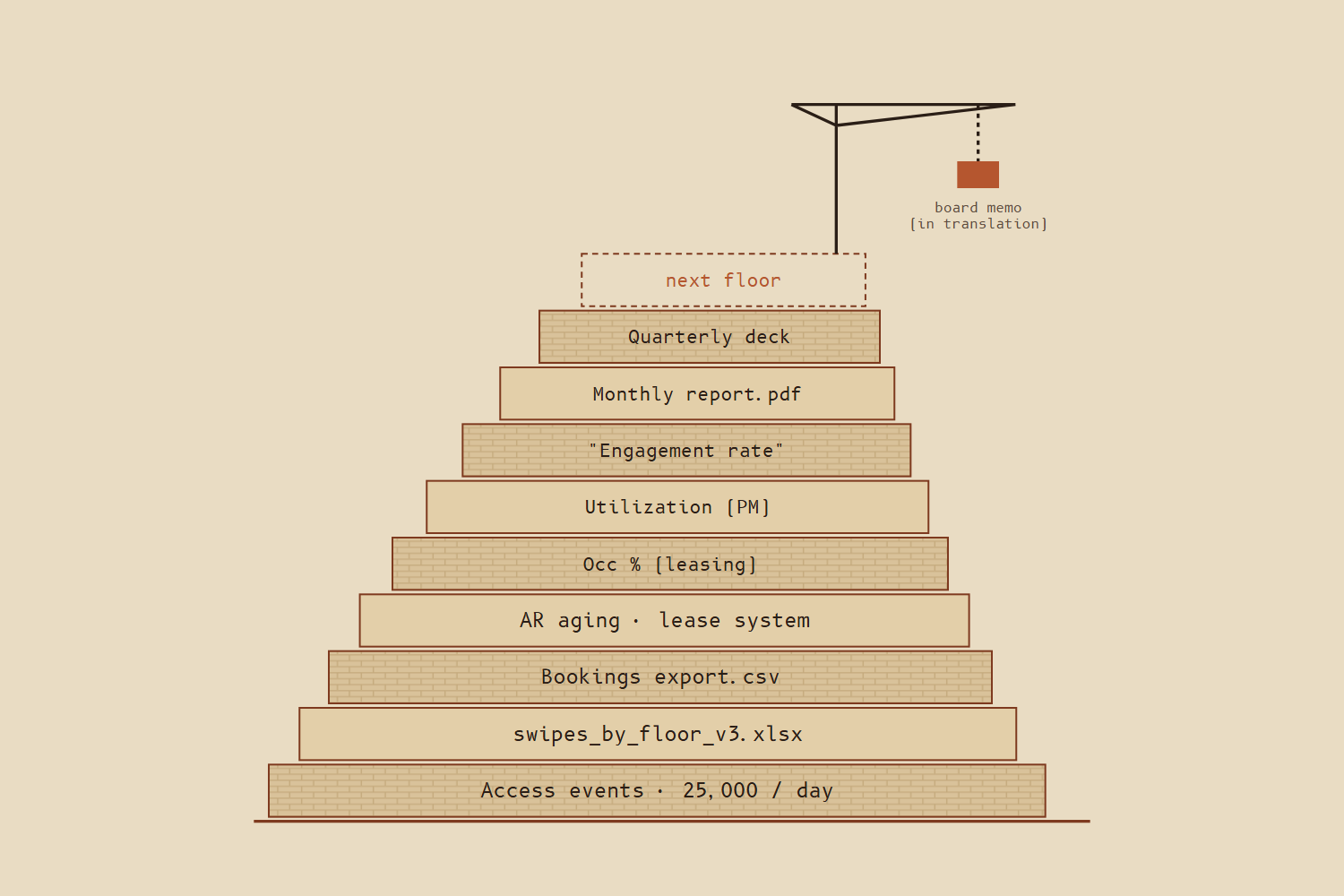
Every system in your building arrived speaking its own language, with its own name for your tenants, its own ID for your suites and its own definition of words everyone assumes are obvious. Once a month, someone translates all of it by hand into a report, and the tower gets one floor taller.
Every Floor Was a Good Idea
Nobody set out to build this. A generation ago, a building gave you a lease, a key and a parking pass. Then tenants started asking for more, and they were right to. Hospitality-grade lobbies. Amenities you book from your phone. Events, wellness, air quality, hybrid schedules, a tenant app, a coffee bar that knows your order.
Every one of those expectations arrived with its own vendor. And every vendor arrived with its own language, including its own word for the person you're trying to serve.
None of this is bad. But somewhere along the way the industry started managing the complexity instead of resolving what it was for. The job of a building is simple to say: create an environment people want to be in. Every new system was supposed to serve that. Most of them now spend their time being reconciled with each other.
We stopped managing buildings and started managing the tools that manage the buildings.
The Phrasebook
Pick one tenant and look it up in every system you own. You'd expect one entry. You get a phrasebook.
| What you mean | Lease system | Access control | Booking app | Tenant app | Wi-Fi |
|---|---|---|---|---|---|
| "The law firm on 12" | Halvorsen & Pike LLP | HALVORSEN PIKE | H&P Legal | Halvorsen and Pike, L.L.P. | guest-network-12 |
| "Their suite" | Ste 1200 | FL12-ZONE-B | 12th Floor East | Suite 1200/1210 | AP-12-03, AP-12-04 |
| "Their people" | 14 contacts | 212 badges | 61 bookers | 38 users | 1,906 devices |
One Word, Five Meanings
Now ask a simple question: how occupied is the building? Ask five people and you'll get five numbers. Every one of them is true. None of them agree, because nobody ever agreed what the word means.
None of these teams is wrong. The trouble starts when all five numbers get stacked into one monthly report and handed upstairs as if they were one.
Every floor of the report is written in a different language. The person at the top is expected to read all of them.
We built a shared definition for occupancy, headcount, and every other word your systems disagree on. See how our semantic layer works →
The $30,000 Insight
Here's what it costs when nobody defines the words. A client of ours had a vendor contract priced per person. Simple enough, until you ask what a person is.
To the vendor, a person was a badge in the access system. Badges don't leave when people do: former employees, one-time contractors, duplicates for the same human being. They all counted. To the building's own data, a person was someone who actually walks in the door.
It came up in a hallway conversation. Nobody built a model or sent an email chain. Someone just had the right number.
Two out of every three "people" on the invoice didn't exist. The word did all the damage.
Still Under Construction
The old story ends with the builders scattered. Not because they lacked ambition or capability or materials. The work stopped because they couldn't speak to each other anymore. Different words for the same bricks, and everything halted.
Your portfolio isn't Babel. But when five people give you five numbers for occupancy, all of them true, none of them matching, it's the same problem at a different scale. The tower isn't unfinished. The words underneath it are.
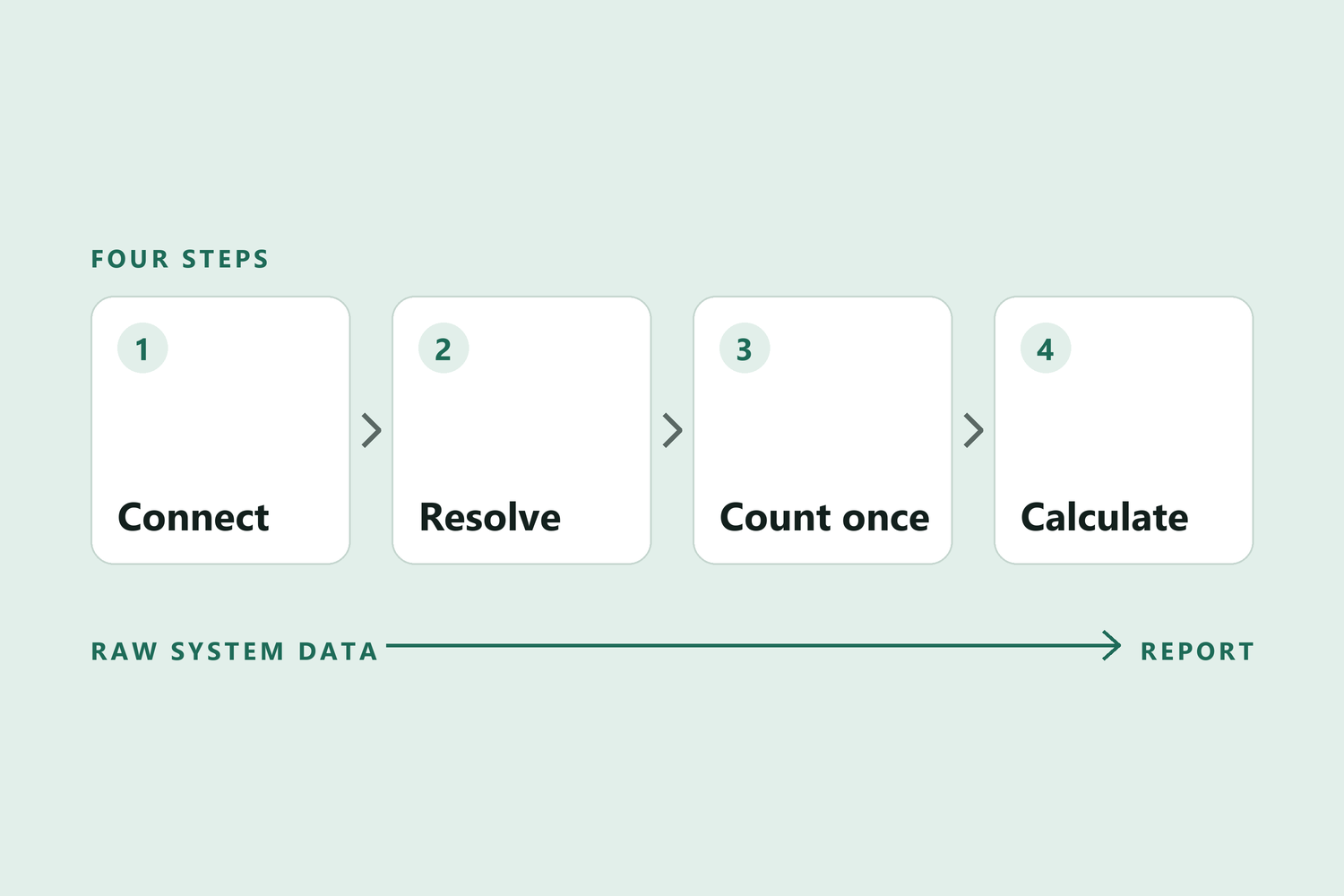
A shared vocabulary doesn't require tearing anything out. It requires one decision: what does this word mean, and how do we calculate it the same way, everywhere, from the systems you already own.
One shared vocabulary for every system in your building, calculated the same way everywhere, fed directly from the data you already own. See how it works →
The original tower in the story sits abandoned, not demolished.
Your tower is still open. Whether it speaks one language is up to you.
The Whiteboard · REKalibrate · Part III of Bypassing the Information Asymmetry
Latest Content & Research












If you can't measure it, you can't improve it
Without measurement, improvement is guesswork. REKalibrate makes measurement possible—and improvement inevitable.

Unlock office insights, drive results
Track customer engagement across amenities
Analyze workspace usage and trends
Assess renewal risk with real data
