The Winchester Garage: A Self-Guided Tour of Your Parking Program
Last issue, your building sent you a postcard. The parking deck doesn't send postcards.

Legend has it the Winchester Mystery House was built for decades with no architect. Staircases run into ceilings. Doors open onto walls. Rooms were added for reasons nobody remembers.*
Your parking program was built the same way. Every new tenant got a new tab. Every new rate got a new column. Nothing was ever torn down.
In Sun Belt office markets, structured parking is a leasing differentiator and a real revenue line. It's also the least-instrumented asset in the building. Welcome to the tour. Please stay with the group.
* Historians say many of the stairs to nowhere were really damage from the 1906 earthquake. Your spreadsheet has no such excuse.
“I try not to think about parking.”
The one with the door that's always closed.
The Parlorwhere the board does the talking
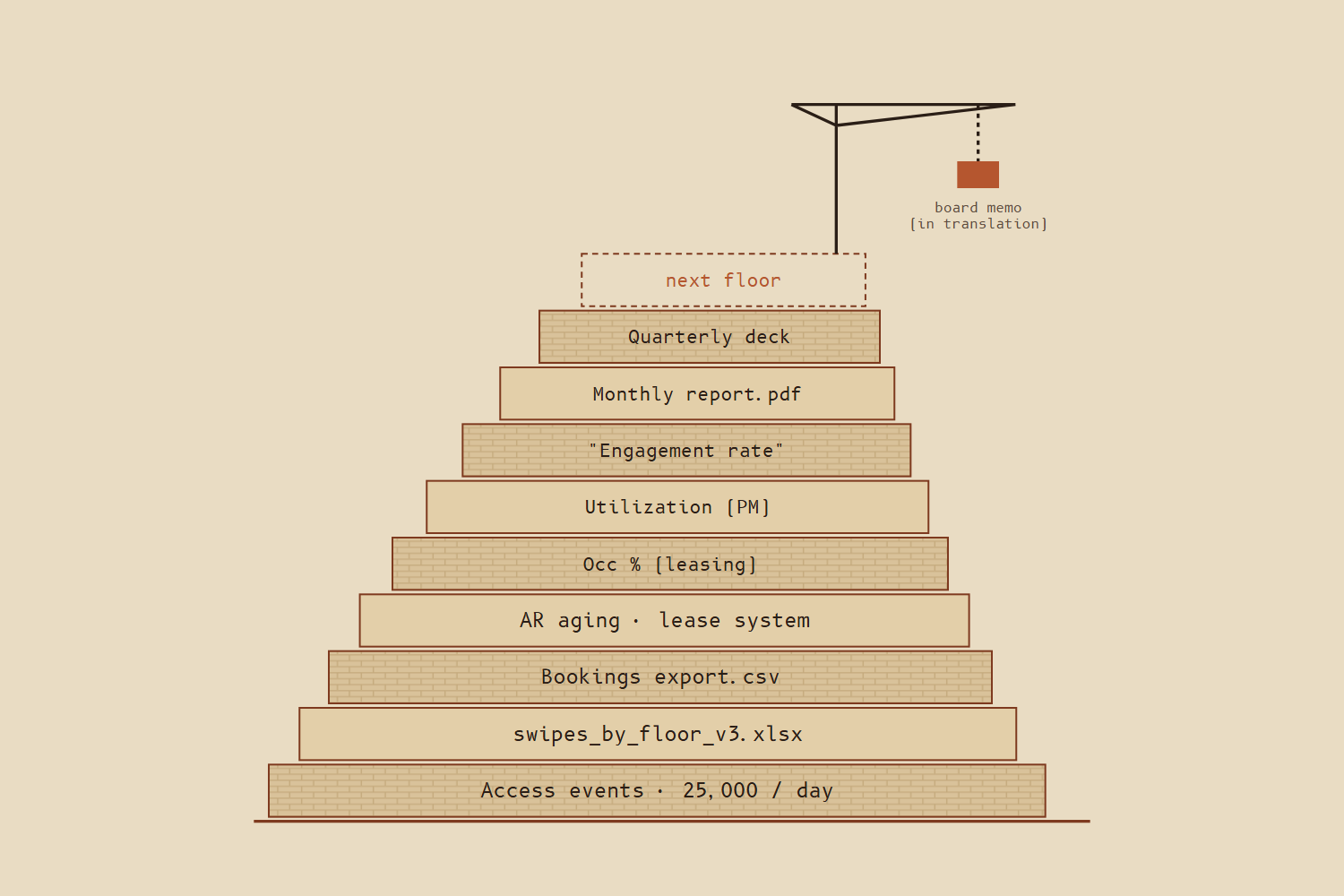
The postcard, at least, spoke in full sentences. Parking talks through a board.
Your operator is the medium. They're doing their best: hands on the planchette, relaying whatever comes through from the access system, the billing export and a master list with no return address. But the channel only moves one letter at a time, and the spirits are not reliable narrators.
Your parking data isn't hiding from you. It just has no way to talk except through the board.
The Door to Nowhereeighteen rooms, zero hallways
Walk the halls and count the rooms: one tab per level, a separate reserved list per building, another for visitor rates, a map nobody updates, and eight more nobody can explain.
Some doors open onto walls. Some staircases end at the ceiling. Somewhere in there is a column called Column1, and nobody alive knows what it's for.
And behind the door marked Ariel Map, something is tapping. Once for yes, twice for no. Nobody's sure which tab it's coming from.
The Haunted Levelwhere the ghost stalls live
This is the part of the tour where the lights flicker.
Reserved stalls sit empty for months while the charge, and the assumption behind it, goes unquestioned. Utilization is locked inside the access system and never reaches the people making decisions. Must-take obligations and over-allotments are tracked by memory.
P2-118
- Status
- Reserved
- Lease obligation
- Must-take ✓
- Monthly rate
- $385
- Used (30 days)
- 0 days
- Billed vs. assigned
- $385 / $385
Tracked by memory. That's not a system. That's a séance.
The Basement Apartmenthome of the estranged cousin
Every family has one. Parking lives under the building. It's technically family, since it's written into the lease. It shows up every month asking for money. Nobody's quite sure what it does all day.
The awkward part: in Southeast markets, the cousin can drive as much as 10% of the building's total revenue. That's not a relative you can ignore. That's a business line running out of your basement on a spreadsheet.
Turn On the Lightsevery haunted house has the same fix
You don't need to demolish the house. You need three read-only feeds from systems you already run, and one system of record where every stall, every parker, every dollar and every lease obligation lives exactly once.
No rip-and-replace. It runs alongside the spreadsheets until the numbers agree and the team trusts it. Then, and only then, you close the old house.
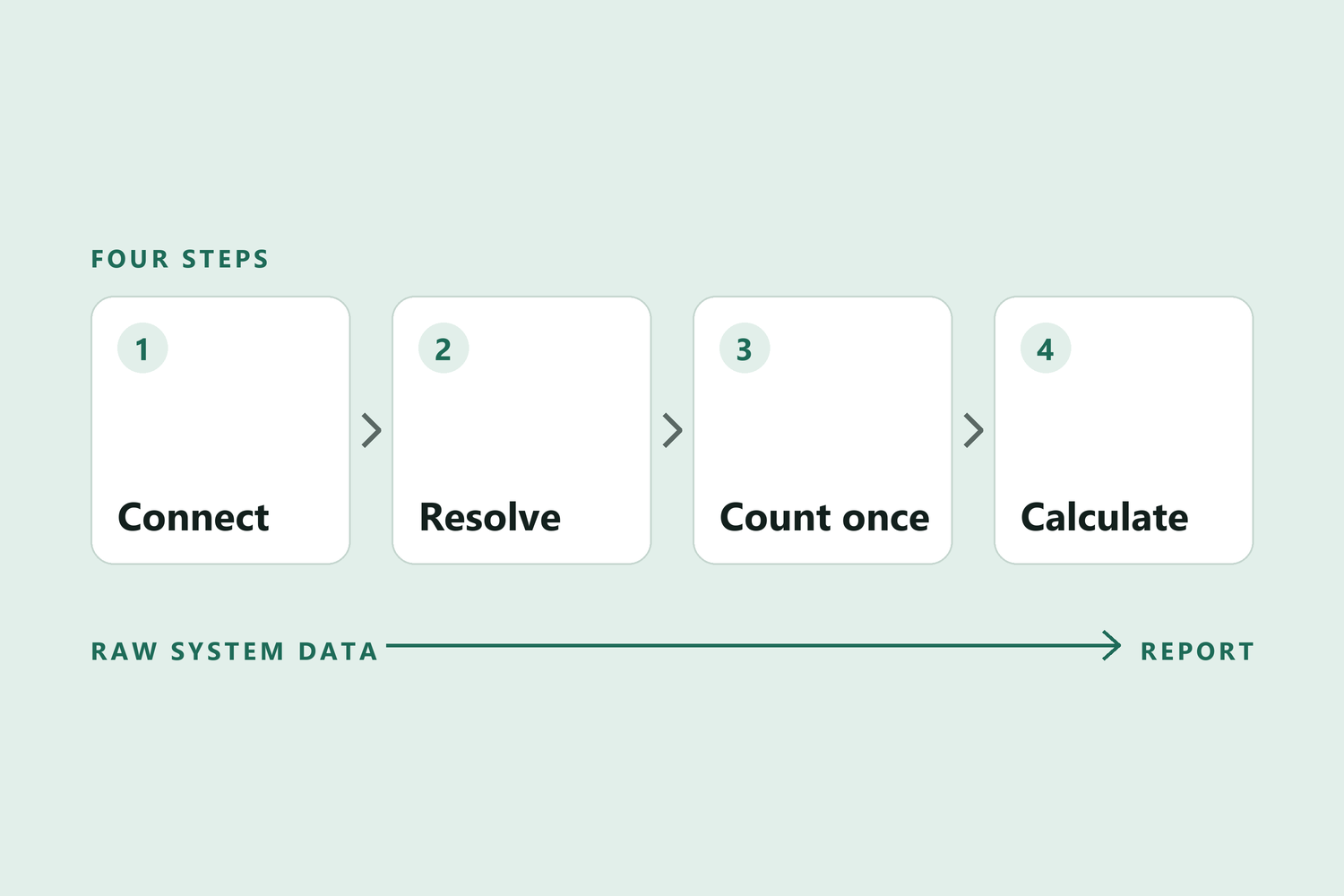
An exorcism in four steps.
- DigitizeModel the deck and stand up the three feeds, read-only.
- Run in parallelMirror the live process and reconcile against the spreadsheets every cycle.
- ValidateConfirm the numbers match and the team relies on it day to day.
- Cut overRetire the spreadsheets. The ghosts go with them.
Go ahead. Think about parking.
Put the board away.