Measure the engagement the app can't see.
A branded captive portal turns the network everyone already connects to into a passive identity layer — capturing name, work email and company at connect time, with nothing for tenants to download.
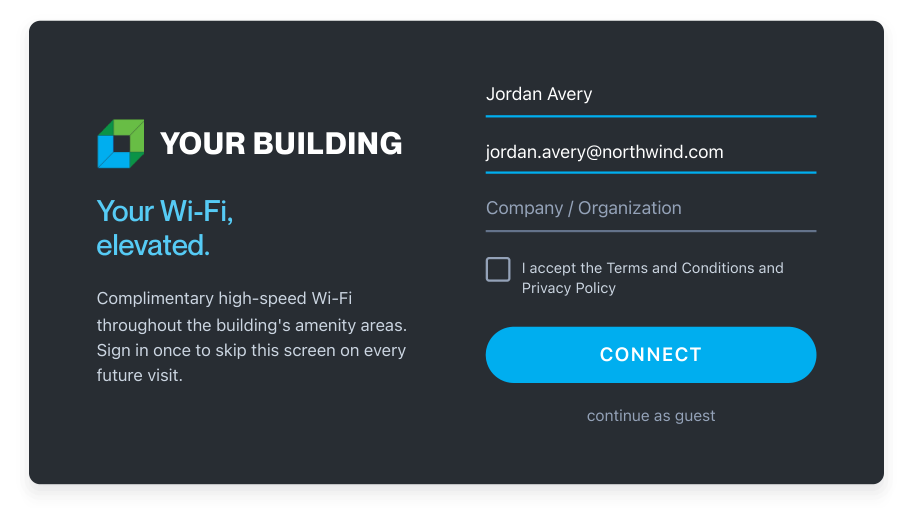
A branded captive portal turns the network everyone already connects to into a passive identity layer — capturing name, work email and company at connect time, with nothing for tenants to download.
Take a building with 2,000 tenants in its identity universe. Around 500 ever download the amenity app. Half of those stay active. And of the activity that does get recorded, only about 40% can be tied back to a person. By the time anything reaches a report, a population of 2,000 has become a measured sample of roughly 100.
Every drop-off in that funnel shrinks the population you can actually measure, and the signal erodes long before anyone reads it. The number that lands on the page isn't low engagement — it's low instrumentation wearing engagement's clothes, and no amount of better programming will move it.
Most tenants never download the app. A low download rate caps every downstream metric — engagement can't exceed that ceiling, no matter how good the amenities are.
Half of downloads never engage. Onboarding friction and low perceived value mean an installed app rarely becomes an active, measurable user.
Most activity can't be tied to a person. Unchecked event attendees, proxy bookings and access records with no identity anchor all suppress attribution.
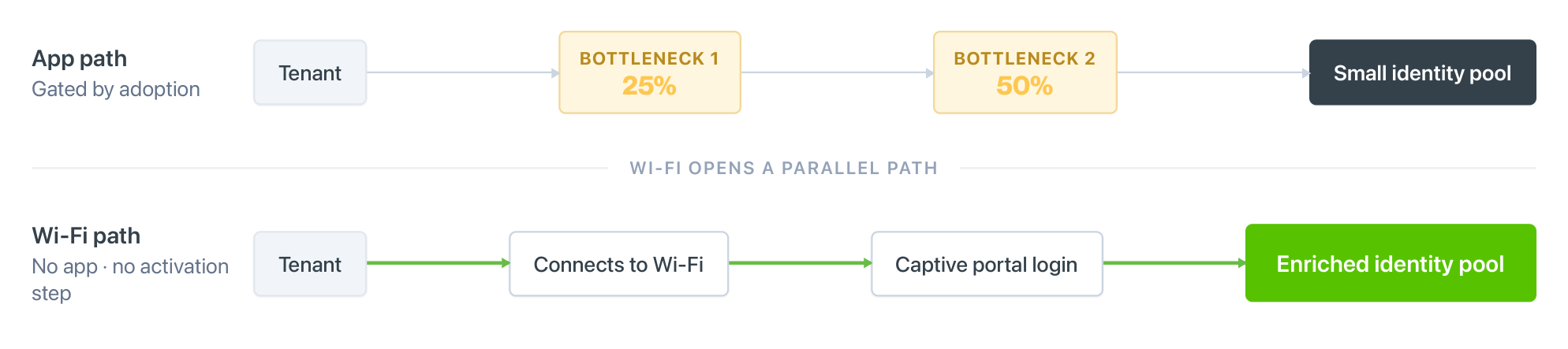
The portal collects name, work email and company the moment someone joins the WiFi — enriching the identity pool with no app in the way. Nothing to download, no activation step to complete, and the firmographic anchor that ties every later signal to a real person and a real tenant.
It opens a second path to identity that routes around both adoption bottlenecks entirely. The app path is gated by downloads and activation; the WiFi path is gated by nothing except connecting to the network people were going to join anyway.
Events depend on someone checking people in, so attendance goes unrecorded — presence at the event's time and location infers it instead. Reservations capture only the booker, so a room booked by an assistant reads as one person; sessions in the room surface everyone who actually showed up. Amenity access records carry no identity anchor and walk-ins leave no record at all — the login supplies both, passively.
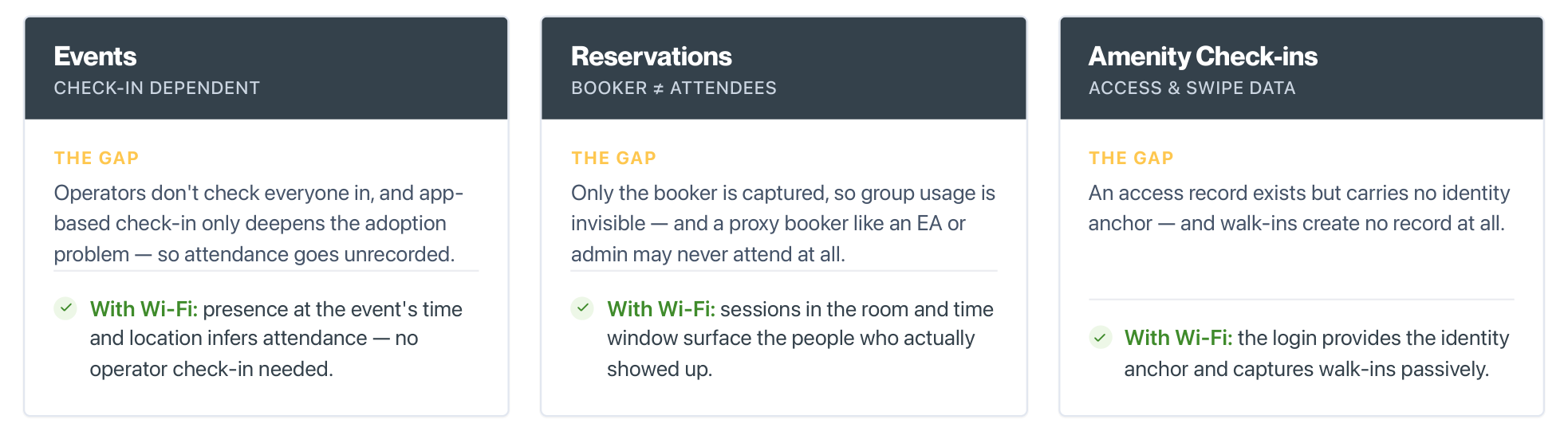
Closing the attribution gap turns amenity activity into a reliable engagement signal — the input that makes a renewal-probability model worth acting on in the first place.
The engagement model this capture layer feeds directly.
The connected, standardized base every other module reads from.
Attendance and utilization, once presence is properly attributed.
It sits alongside your amenity platform and feeds the same engagement models — there's no tenant rollout, and the identity pool starts enriching the moment the portal goes live.