Run parking as a system of record.
Every space, every parker, every dollar and every lease obligation — modeled once, kept current, and reconciled against the systems you already run.
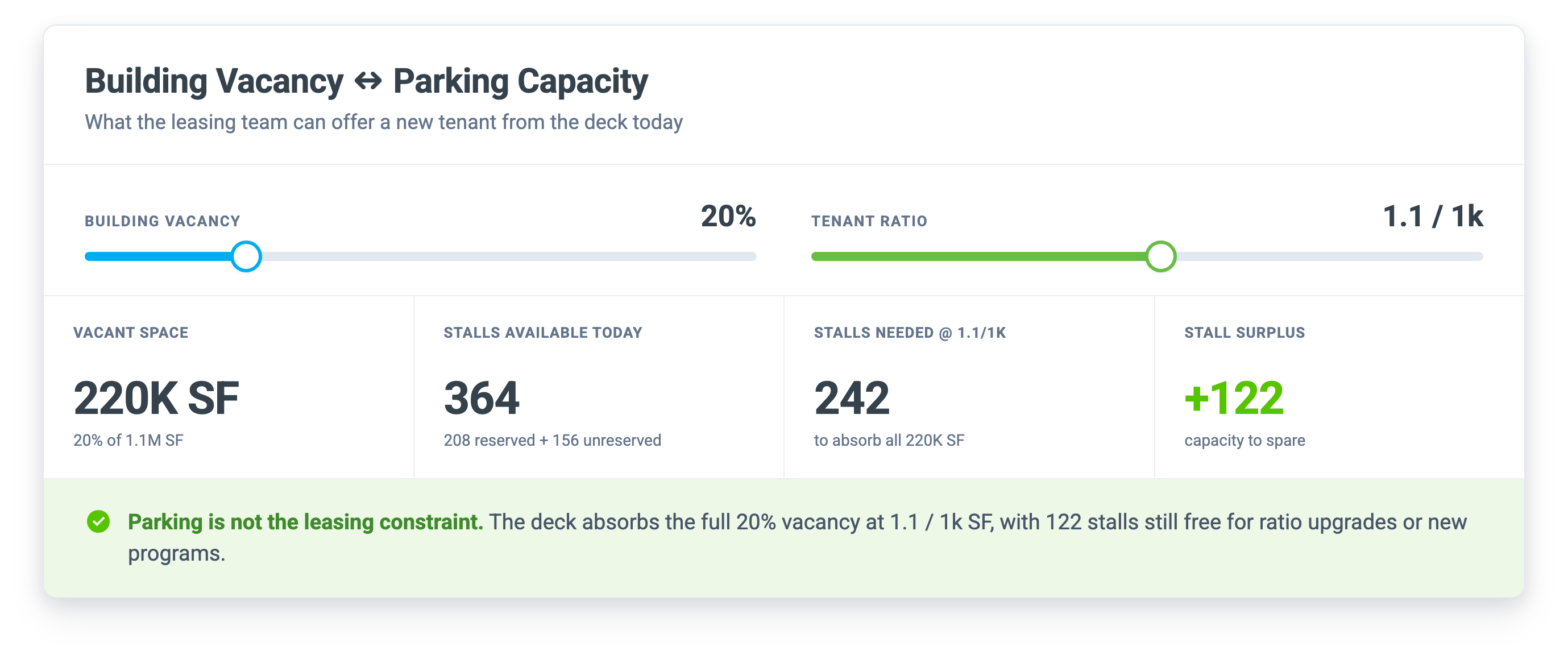
Every space, every parker, every dollar and every lease obligation — modeled once, kept current, and reconciled against the systems you already run.
It is both a leasing differentiator and a real revenue line — in some markets as much as a tenth of what a building earns. Yet assignments sprawl across a dozen-plus spreadsheet tabs, one per level, with a separate reserved list per building and another for visitor rates. Stall IDs are hand-typed and inconsistent. The only version control is the number in the filename.
Meanwhile utilization stays locked inside the access system and never reaches the people making decisions, and must-take obligations are tracked by memory rather than by data. So reserved stalls sit empty for months while the charge goes unquestioned, month-end never quite reconciles, and leasing can't confirm what a vacant floor actually offers — which is how a prospect's parking need quietly becomes a lost deal.
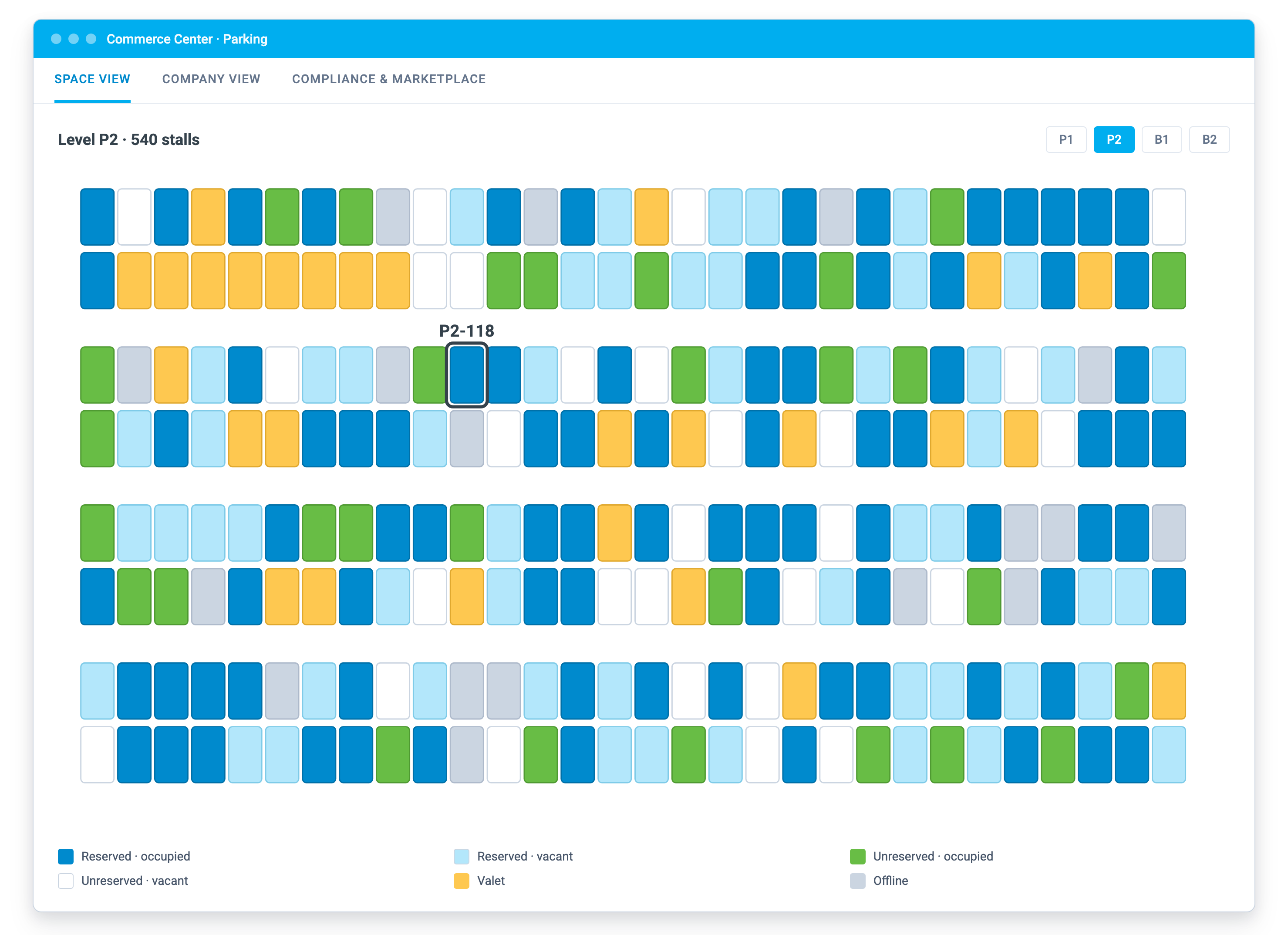
Every stall becomes a live object on an interactive floor plan, backed by an inventory database holding its rate, assignment, status and lease obligation.
Access control, billing and lease abstracts sync automatically. The module enriches and reconciles — it never overwrites the systems of record, and it runs without disrupting live operations.
Space, company, capacity and performance views over the same data — so operations, leasing and asset teams each get the lens they need on demand without reconciling anything by hand.
Color shows state at a glance — reserved or unreserved, occupied or vacant, valet or offline. One click opens the full record: who it's assigned to, what it bills, whether it's a must-take, and how many days it was actually used. Ghost spaces surface on their own.
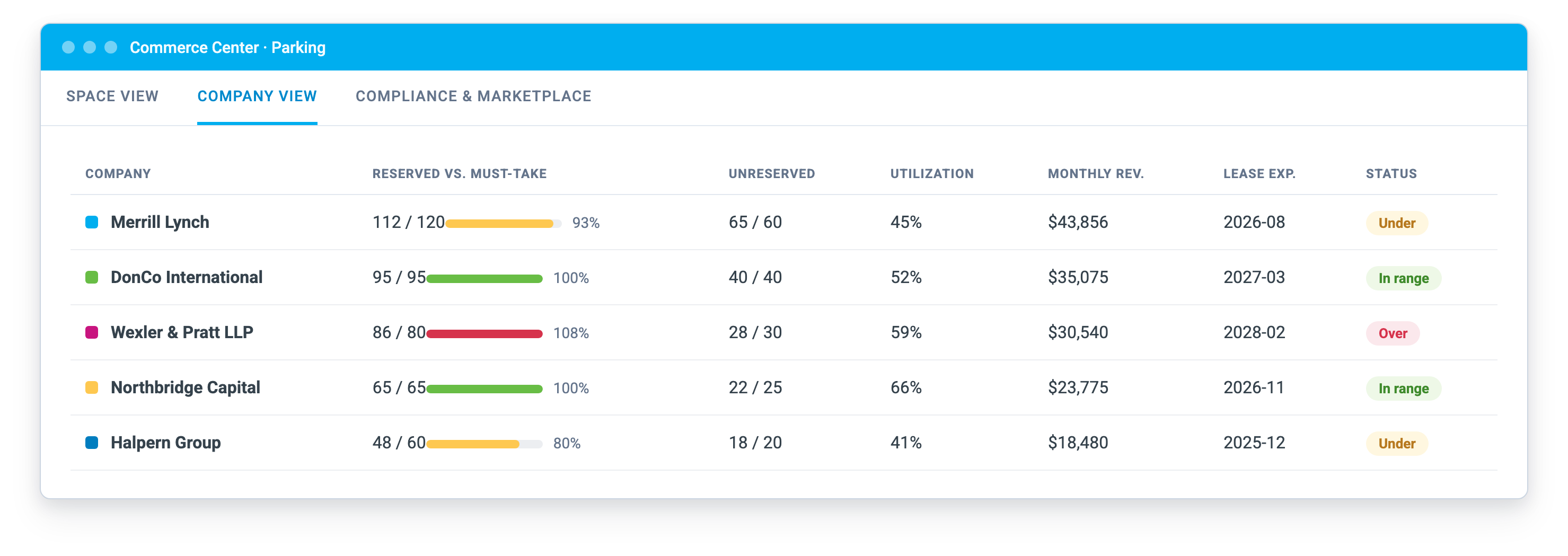
The same data pivoted around the company: assigned versus contracted, billed versus owed, and where each tenant sits against its lease. Over-allotments and expiring leases with parking obligations flag early — and the same model tells leasing exactly how many stalls a vacant floor can be offered, before anyone gets to the table.
Parking can be a tenth of building revenue and still be the last thing anyone wants to look at. Instrumenting it turns a spreadsheet nobody trusts into a product you can optimize.
The connected, standardized base every other module reads from.
Read parking alongside engagement, against the same resolved population.
Turn parking demand into a forecast of the space each customer will need.