Jevons and Sevens: When Analysis Gets Cheap, Consensus Is Free
Analysis just got cheap. History says we'll use far more of it. The question is what becomes valuable once everyone can run it.
Analysis just got cheap. History says we'll use far more of it. The question is what becomes valuable once everyone can run it.
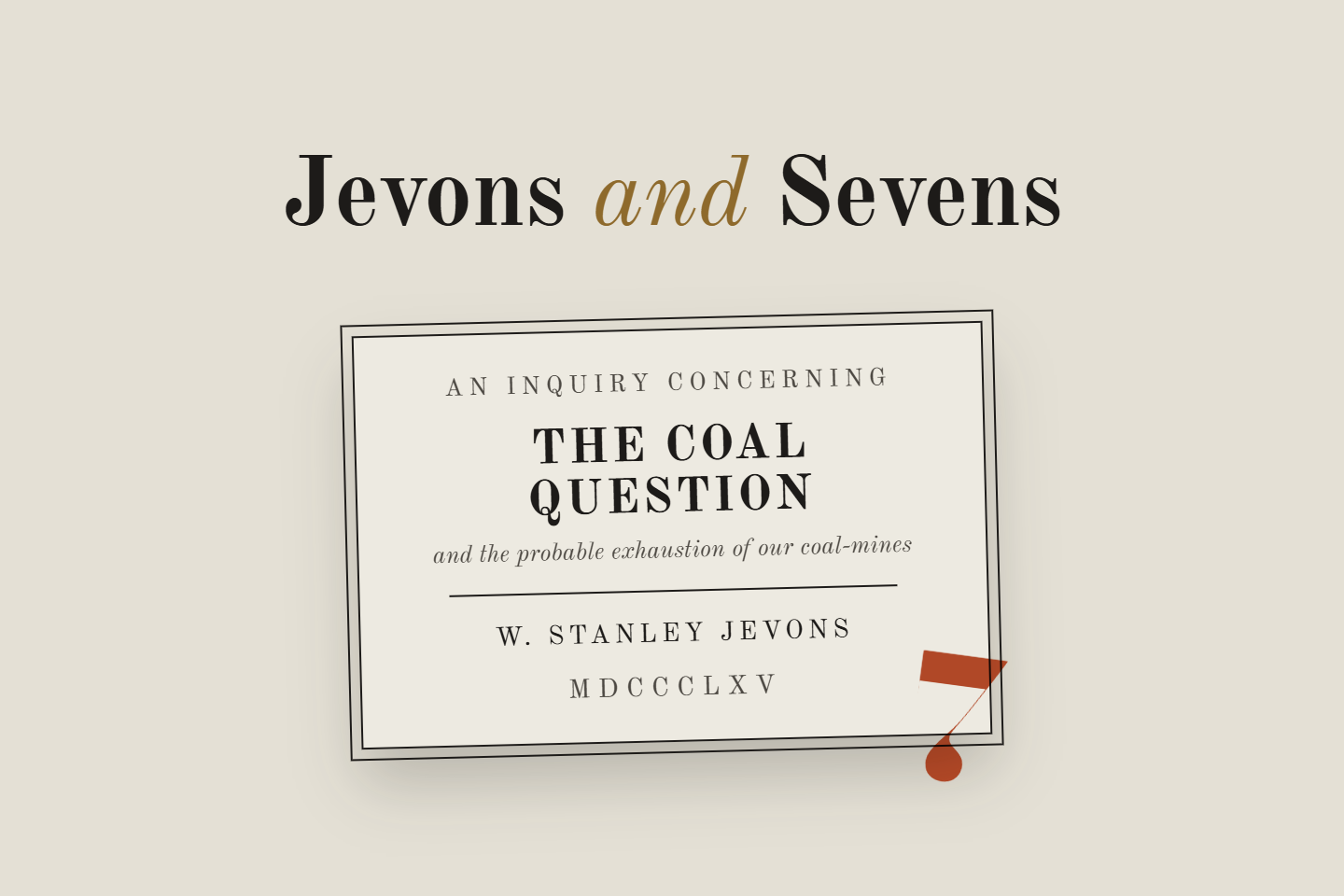
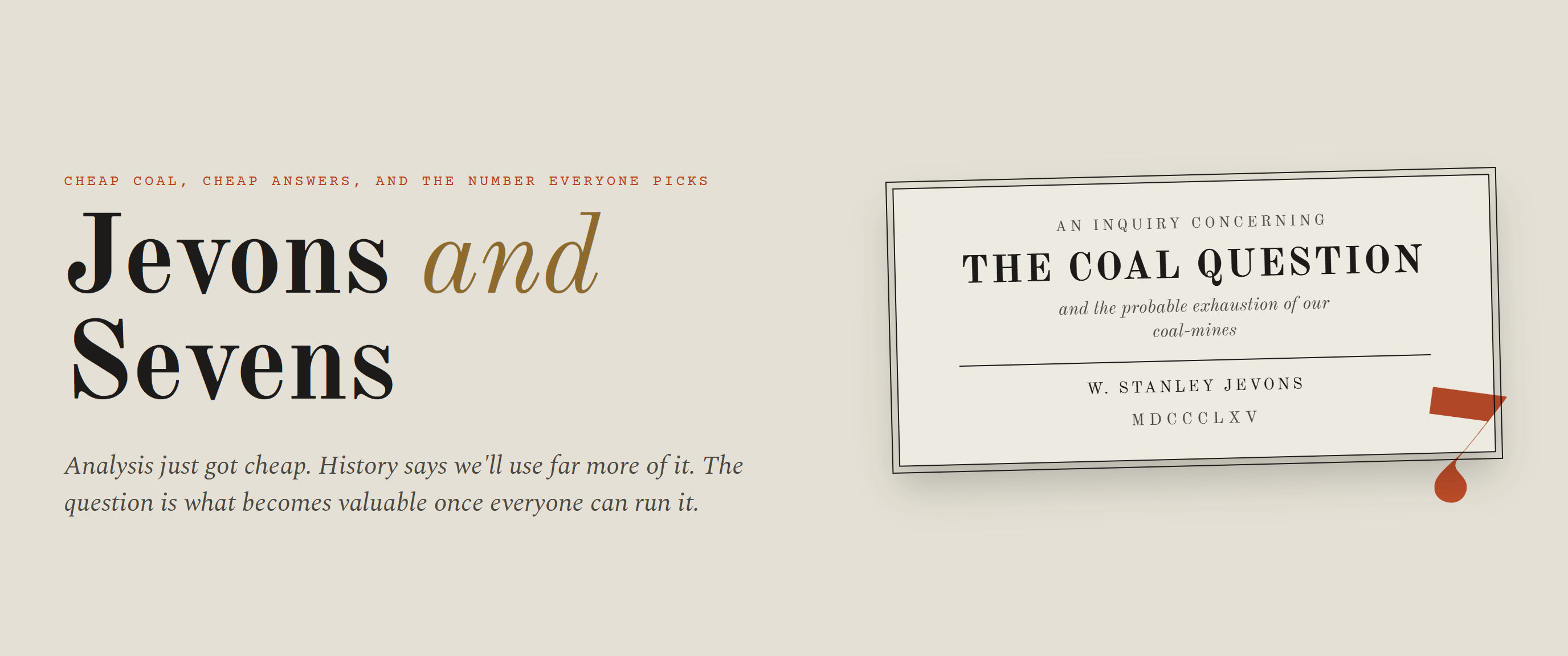
and the probable exhaustion of our coal-mines
A new series starts here. It's about drawing distinctions between things. Let's start with an old joke:
There are two kinds of people in this world: those who can extrapolate from incomplete data…
In 1865 a 29-year-old economist named William Stanley Jevons published a book with a gloomy title. Britain ran on coal, and coal would run out. Better steam engines would surely help, since an engine that burned less coal per hour should mean less coal burned.
Jevons argued the opposite. Every time engines got more efficient, coal became worth burning in more places: more mills, more railways, more ships. Efficiency didn't save coal. It made coal useful everywhere, and total consumption went up.
Economists still call it the Jevons paradox. It's about to happen to analysis.
The Coal Question
Swap coal for analysis and you have this year's news. A question that took an analyst a week now takes an afternoon. The panel discussions mostly ask how many analysts that replaces. Jevons would ask a better question: how much more analysis gets done, and what does it all run on?
Real Estate's Coal
Real estate has always wanted more analysis than it could afford. Every lease, every renewal, every amenity bet and capital decision could use one more cut of the data. The demand was never the problem.
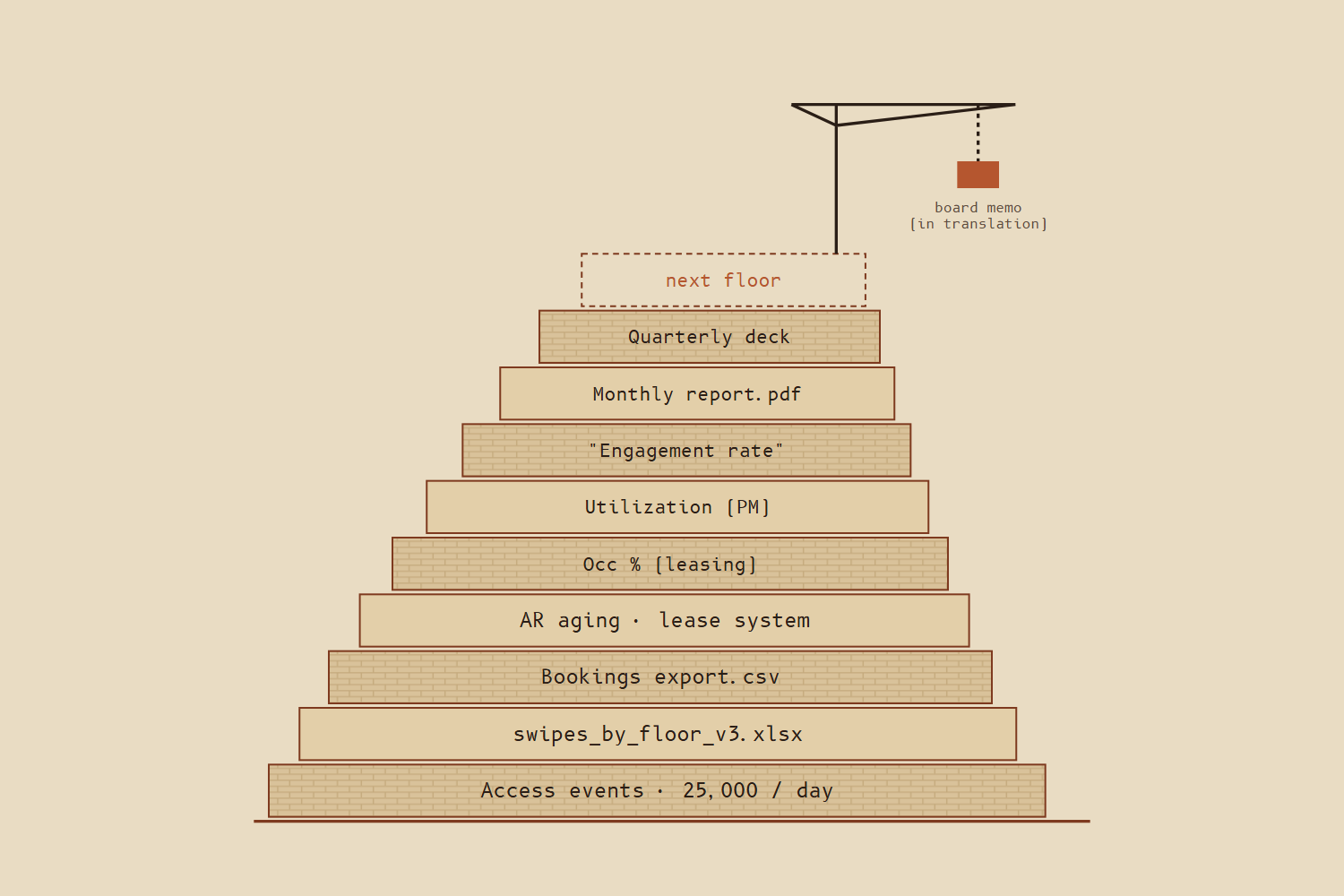
The cost was. Each answer meant analysts, consultants and weeks of stitching together leases, badges, Wi-Fi and bookings that were never built to talk to each other. Back in Greetings from Your Building, a single question took twelve days to travel down the chain and back.
Demand: extremely elastic
Lower the price of an answer and the questions never run out.
Cost: stubbornly high
Until this year. Most questions simply went unasked.
Here's what the price drop looks like in practice. A few weeks ago, one of us started an afternoon by asking whether a newly connected building had any Wi-Fi data yet. By the end of the day there was a heatmap, a test of whether Wi-Fi users used the amenities more, a reconciliation of a messy tenant credit program, and a priced incentives proposal on its way to an owner.
Analysis is the coal. The price just collapsed. Expect to burn a lot more of it.
Not Every Industry Burns More Coal
At the summit we sat next to an architect who sees it differently. Their view: a large share of the work in their field can be done by AI, and headcount is going to fall. They may well be right, and Jevons explains why.
The paradox only pays out where demand is elastic, where a lower price makes people buy much more. Architecture is hard to make elastic. Buildings get built when the capital and the tenants are there, not because drawings got cheaper. The market is already fully served, just at a higher price. Cut the cost of design in half and you get roughly the same number of buildings, designed by fewer people.
Much of law looks the same: deals close and disputes arise at their own pace. Other professional services look very different. Ask any company whether it would buy more analysis, more audit coverage or more advice at a tenth of the price, and the answer is yes.
A small price drop, a big jump in what gets bought. More work, and more workers.
The same price drop, almost the same amount bought. The savings come out of headcount.
So the honest answer to "will AI cut jobs?" is: it depends on the shape of your demand curve. Where demand is fully served, headcount compresses. Where most questions went unasked, the work expands and changes shape.
Even the inelastic fields have an elastic pocket. An architect who can show how the last ten buildings were actually used is selling something a prompt can't produce. We'll come back to that.
Jevons only pays out where demand is elastic. Everywhere else, cheaper work means fewer workers.
Everyone Gets a 7
So what's the catch? Try this before you read on.
Copy this prompt into your favorite AI.
Pick a number between 1 and 10. Reply with just the number.Use a fresh chat. Then tell us what it said.
A language model predicts the most likely answer, given everything people have ever written. People already lean toward 7. The model learns that lean, and tuning sharpens it into a spike. Ask it for something random and you get the consensus, concentrated.
That's fine for most tasks. But it means the cheap answer and the common answer are the same answer. When you and every competitor ask the same model the same question over the same public data, you all get the 7.
That's commodity value: anything anyone with the same tools could produce. Its price is heading toward zero, along with the price of analysis itself. The value that holds is the answer nobody else could have reached.
When analysis is cheap, consensus is free. Novel value is what's left to sell.
HUMINT and SIGINT
Intelligence agencies split their work into two old disciplines. SIGINT is signals intelligence: what the instruments pick up. HUMINT is human intelligence: what people know, and what you only learn by asking them.
AI is the best signals analyst ever hired. It reads every intercept, never sleeps and costs almost nothing. It does no field work. It doesn't know which tenant is badging in before its lease is signed, who a discount code was named after, or that an empty conference room is wasted inventory and not a cost. Someone has to go and find that out.
Every organization now has the same signals analyst on staff, so the analyst can't be the advantage. What differs is what you give it to work with:
- Signals nobody else has. Your own systems, customers and history, connected so they describe the same thing the same way.
- Field knowledge, written down. What your people learn on site, recorded so every future answer starts from it instead of from the internet.
- The question nobody else asked. A model answers the question you give it. Knowing the territory is what lets you ask a better one.
None of those come from a better model. Everyone will have the better model.
Cheap analysis raises the value of the two things it can't produce on its own: data nobody else has, and the expertise to ask the right question.
Two Questions
Put the two halves of this piece together and every business has two questions to answer. Is the demand for our work elastic? And are we selling commodity value or novel value?
Compression
Same work, fewer people, falling prices. The architect's fear, and a real one for any firm selling the consensus answer.
Commodity boom
Volume explodes, margins vanish. Everyone sells the same cheap answer.
Premium niche
A smaller field paid for judgment no prompt can produce. The architect who knows how the last ten buildings were used.
Jevons winners
Demand grows, and the answers are worth paying for. Fewer people doing old work, more doing new work.
For the office buildings we work in every day, the answer looks clear. Demand for knowing how buildings are really used is enormous, and almost none of it was ever affordable. The owners who win will be the ones whose buildings can answer questions the consensus can't.
The Whiteboard · REKalibrate · Part 1 of Two Kinds of People